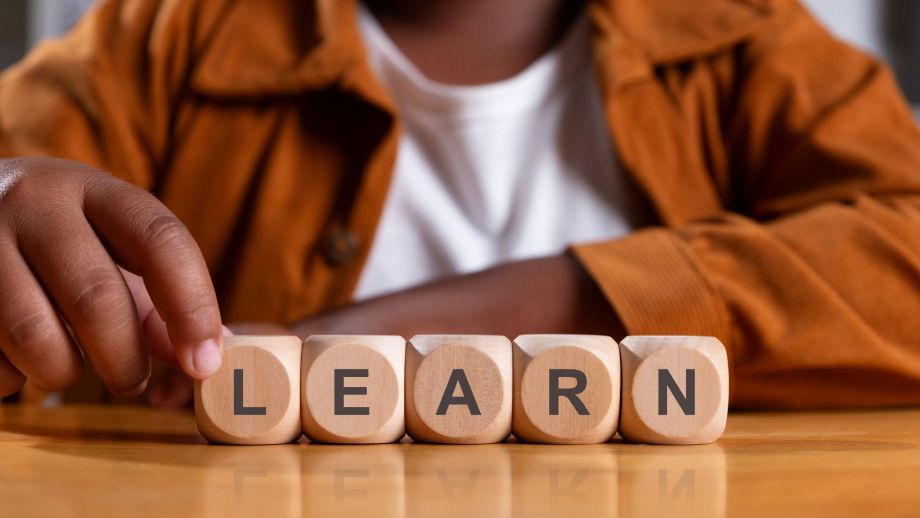
Neuroeducation has helped us better understand how attention, emotion, memory, motivation, and context influence learning processes. Although learning is a complex process, we now know that simply presenting information is not enough: it is necessary to design experiences that help students understand, connect, practice, remember, and apply what they have learned.
In this context, artificial intelligence can be a useful tool for creating resources that are better aligned with the way the brain learns. It can help adapt explanations, sequence content, generate varied activities, propose supports, and offer different ways to practice the same skill.
However, AI should not be used as an automatic solution. In order to provide value, it needs to be guided by pedagogical criteria and by a responsible perspective on learning. It is not about creating more materials, but about creating better-designed resources that are clearer, more accessible, and more connected to the real needs of the classroom.
Why Is It Important to Take Into Account How the Brain Learns?
Learning does not happen in a linear way, nor does it happen the same way for everyone. The brain learns better when it can pay attention, connect new information with prior knowledge, practice progressively, and receive guidance throughout the process.
That is why educational resources should avoid overload. A material that is too long, confusing, or full of information can make comprehension more difficult. By contrast, a clear, well-organized explanation supported by examples makes it easier for students to build meaning.
It is also important to take emotion and motivation into account. A resource that is relatable, visual, contextualized, or connected to real situations can spark more interest than an activity disconnected from the classroom experience.
Neuroeducation is not about applying simple recipes, but about designing with greater awareness. It helps us ask whether a resource supports attention, whether it allows for practice, whether it offers enough support, and whether it helps consolidate what has been learned.
How Can AI Help Reduce Cognitive Overload?
One of the challenges of educational design is presenting information in a clear and manageable way. AI can help simplify explanations, divide content into steps, create graded examples, or transform a complex text into a more accessible version.
It can also generate clearer instructions, summaries, outlines, guiding questions, or activities organized in phases. This allows students to avoid facing all the content at once and instead progress gradually.
For example, an explanation of a difficult concept can become a short sequence: first, a main idea; then, an everyday example; later, a guided activity; and finally, a question to apply what has been learned.
This type of design better respects attention and memory processes. AI can help organize content, but the teacher must review that the simplification does not weaken the learning or remove important ideas.
How Can AI Support Practice and Consolidation?
The brain needs practice to consolidate learning. It is not enough to read an explanation only once. It is necessary to retrieve information, apply it in different contexts, and review mistakes in order to move forward.
AI can facilitate the creation of varied practice activities: comprehension questions, challenges, examples, graded exercises, applied situations, review activities, or self-assessment proposals. It can also generate different versions of the same task to reinforce a skill without always repeating the same format.
In addition, it can help design sequences in which students move from more guided activities to more open-ended ones. This progression allows them to gradually gain confidence and autonomy.
The key is for practice to be meaningful. It is not about repeating for the sake of repeating, but about offering opportunities to retrieve, connect, and apply what has been learned in increasingly deeper ways.
How Can AI Support Personalized Learning?
Each group has different paces, interests, and needs. AI can help create resources adapted to different levels of understanding, response formats, or degrees of support. This makes it possible to offer more pathways to reach the same objective.
For example, the same content can be presented as a short text, an outline, an audio resource, a visual activity, a quiz, or a practical challenge. Versions can also be prepared with more hints, simpler vocabulary, intermediate steps, or a higher level of challenge.
This personalization helps make learning more accessible. The goal is not to lower expectations, but to offer the necessary supports so that each student can progress from their own starting point.
The teacher’s role remains essential. AI can propose adaptations, but teachers are the ones who decide which are appropriate for the classroom and how they should be used.
How Can AInara Help Design Resources from This Approach?
AInara makes it possible to create educational content with a guided, safe approach oriented toward teaching practice. Its use can help design materials that are clearer, better sequenced, and adapted to different learning paces.
With AInara, teachers can generate activities, quizzes, stories, presentations, audio resources, explanations, or learning situations that take into account different levels, languages, formats, and needs. This makes it easier to create more accessible and personalized resources.
In addition, AInara can help transform lengthy content into more manageable proposals, create intermediate phases, add reflection questions, or generate review activities that support consolidation.
Its value is not only in producing content, but in supporting teachers as they design learning experiences that are more coherent with the way students understand, practice, and remember.
In Summary
AI can help create educational resources that are better aligned with how the brain learns when it is used with pedagogical judgment. It can facilitate clear explanations, reduce overload, propose varied practice, personalize materials, and offer different ways to access learning.
However, the tool does not replace the teacher’s perspective. Teachers remain the ones who interpret the context, review the materials, and decide how to use them.
With AInara, artificial intelligence becomes an ally for designing clearer, more accessible, and more personalized resources, better respecting the processes of attention, memory, motivation, and consolidation that are involved in learning.
![DIPTICO_AINARA_2024 [Recuperado]-18](https://www.ainara.education/wp-content/uploads/2024/11/DIPTICO_AINARA_2024-Recuperado-18-993x1024.png)