Generative artificial intelligence is transforming the way work is done in the classroom. It makes it possible to create texts, ask questions, summarize information, prepare presentations, or generate teaching proposals in less time. For teachers, it also opens the door to designing more varied activities, adapting materials, creating rubrics, and better personalizing learning experiences.
However, this new scenario also raises a key question: if a student can submit an apparently excellent assignment with the help of AI, how do we know whether they have really learned?
For years, a significant part of assessment has focused on the final result: an essay, a presentation, a worksheet, a project, or a written response. But generative AI forces us to look beyond the submitted product. The challenge is no longer just to assess whether a task is well done, but to understand how the student got there.
That is why teachers do not only need artificial intelligence tools. They need pedagogical criteria to integrate AI into the classroom and assess the learning process, not just the final result.
How Does AI Change the Rules of Assessment?
An AI tool can generate a correct answer in seconds. It can write a well-structured text, propose arguments, solve an exercise, or create a final product that looks very complete. But that does not always mean the student has understood the content.
The problem is not that students use AI, but that they use it to skip the learning process. If the activity is limited to submitting a result, the tool can replace an important part of the cognitive effort: thinking, trying, making mistakes, revising, comparing, and explaining.
That is why assessment needs to adapt. It is no longer enough to ask, “What have you submitted?” It is also necessary to ask: What did you know before starting? What did you ask AI? What answer did it give you? What did you change? What did you check? And what did you learn during the process?
Assessing in the age of AI means making the path visible, not just looking at the finish line.
How Can We Design Activities Where the Process Matters?
Artificial intelligence can bring a lot of value when it is used with a clear pedagogical intention. It can help students organize ideas, receive support, compare options, improve an explanation, or review a piece of work. But for this to happen, the activity needs to be well designed.
Instead of asking only for a final essay, the teacher can ask for an initial draft, the questions asked to AI, a critical review of the answers received, and a final reflection on the changes made.
Instead of assessing only a presentation, the teacher can also assess how the information was selected, which sources were checked, what decisions were made, and how the student explains the content in their own words.
This does not mean making assessment more complicated, but making it more consistent with today’s reality. The final product still matters, but it is no longer the only evidence of learning.
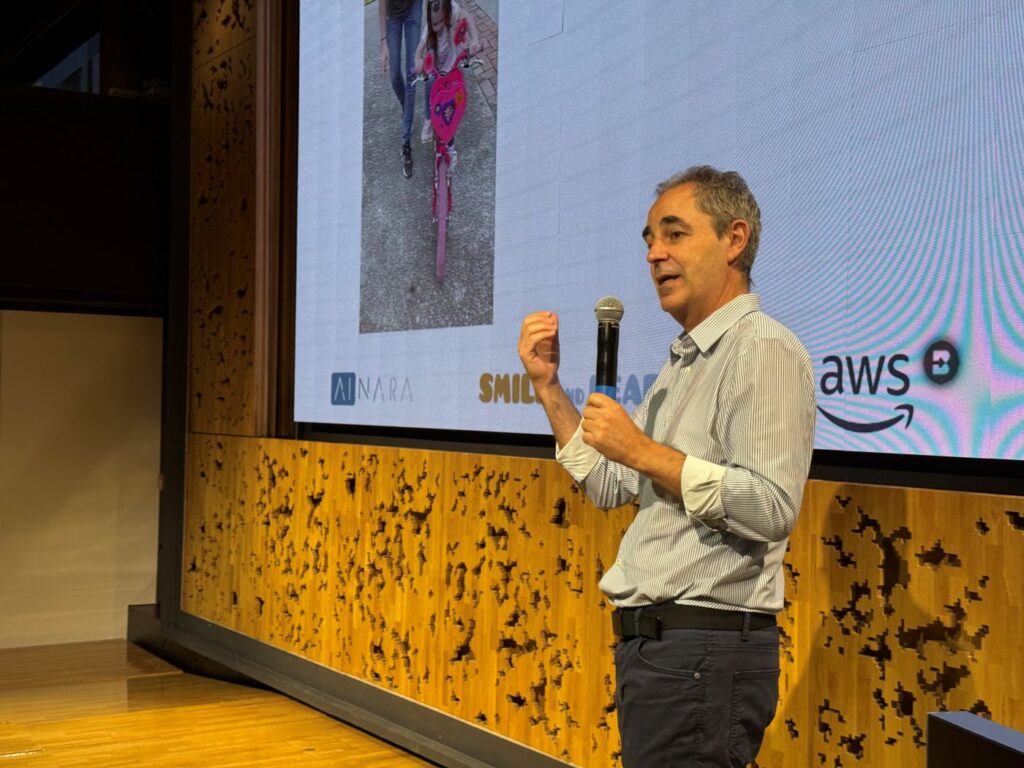
Melchor Gómez’s Talk: AI as Training Wheels
In his talk, Melchor Gómez uses a very clear metaphor: AI can work like training wheels on a bicycle. Training wheels help children pedal without falling, provide confidence, and make movement easier. But they can also create a false sense of mastery.
A child using training wheels can move forward, but that does not mean they have truly learned how to keep their balance. Something similar happens with AI. A student can submit a very well-written assignment, but that does not guarantee they have understood the content or can explain it on their own.
The key lies in how the tool is used. If AI gives the answer directly and the student simply copies it, learning can be weakened. But if AI supports, guides, provides feedback, and helps with revision, it can become a very valuable aid.
The goal should not be to prevent its use, but to teach students how to use it critically.
From the Perfect Product to Real Learning
Melchor Gómez’s talk invites us to rethink a fundamental idea: AI does not only change the tools used in the classroom; it also changes the evidence we need in order to assess learning.
Before, a strong final product could be enough to show the work that had been done. Now, that product may have been generated or improved with the help of AI. That is why teachers need to observe other elements: reasoning, questions, decisions, revision, argumentation, and the student’s ability to explain what they have done.
This opens up an opportunity to move toward more formative assessment. Assessment that does not limit itself to grading at the end, but supports learning while it is happening.
It also makes it possible to personalize better. Some students will need support to formulate questions. Others will need help reviewing answers. Others will need guidance to compare information or express clearly what they have learned.
How Can AInara Help Assess the Process?
AInara supports teachers in creating educational resources with generative artificial intelligence through a guided and pedagogical approach. This is especially useful when the goal is not only to create an activity, but to design a complete learning experience.
In the context of assessment, AInara can help generate sequences with intermediate stages, reflection questions, rubrics, assessment criteria, revision activities, and proposals adapted to different levels and needs.
It can also make it easier to offer different ways of showing what has been learned: a written explanation, a presentation, an audio recording, an infographic, a visual product, or an oral presentation. In this way, assessment does not focus only on everyone submitting the same thing, but on each student being able to show what they have understood.
The value of educational AI is not only in generating content quickly, but in helping teachers design processes with pedagogical meaning.
If you want to learn more about this educational challenge, do not miss Melchor Gómez’s talk on our YouTube channel, where he reflects on how artificial intelligence is transforming the way we teach, learn, and assess.
AI as an Opportunity to Assess Better
Generative artificial intelligence forces us to review some practices that once seemed sufficient. If a task can be solved in seconds, perhaps that task needs to change. If a perfect submission does not prove understanding, perhaps assessment needs to look beyond the result.
This does not mean giving up effort or lowering expectations. On the contrary, it means placing expectations where they really matter: on understanding, judgment, reflection, and the ability to explain one’s own process.
AI can be a risk if it is used to skip learning. But it can also be an opportunity to design better activities, offer more support, and help students participate more consciously in their own learning process.
Because assessing in the age of AI is not only about looking at what a student has submitted. It is about understanding what they have learned, how they have learned it, and what role technology has played along the way.
To explore this project in depth and discover the selection highlighted by the jury of the 2nd AI with Educational Impact Awards, access all the selected projects here:
In Summary
Assessing in the age of artificial intelligence means adopting a deeper perspective that is more connected to the real learning process. When a tool can generate a final product in seconds, the key is not only to assess what students submit, but to understand how they got there and what they learned along the way.
In this process, AInara acts as a support for designing learning and assessment experiences with pedagogical meaning. Through sequences, rubrics, reflection questions, and revision activities, the tool helps make the process visible and offers different ways to demonstrate learning.
Assessing with AI means maintaining expectations, but directing them toward what truly matters: understanding, critical thinking, and the ability to explain one’s own learning. AInara helps make that path clearer, more personalized, and more connected to the real challenges of the classroom.
![DIPTICO_AINARA_2024 [Recuperado]-18](https://www.ainara.education/wp-content/uploads/2024/11/DIPTICO_AINARA_2024-Recuperado-18-993x1024.png)